Military in Greece and Rome
Bronze age to iron age
Greece
Warfare in Greece was originally very simple, with normal citizens being gathered and raiding borders or attacking cities. Warfare remains simple until Greek city states have enough money and people to allow soldiers to work full-time. Sparta is probably the best example of a militaristic city-state. In Sparta, children would be trained from a young age to prepare their body and minds for war. Children who were 7 years old would train in the Agoge, or training camp, until they were about 30 years old. They were taught how to use weapons, trained in strength and endurance, and once they were 20, they would serve in the military until they were 30, when they became a full citizen.
Weapons in Greece
In Greece, many soldiers used javelins, short swords, bow and arrows, shields, and slings. The Greek city-state of Athens had a very powerful navy with ships that would ram other ships to sink them. Originally, Greek city-states were not very good at sieging, but once weapons like ballistas and siege engines were created, Greek city states were able to siege much better.
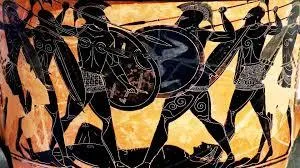
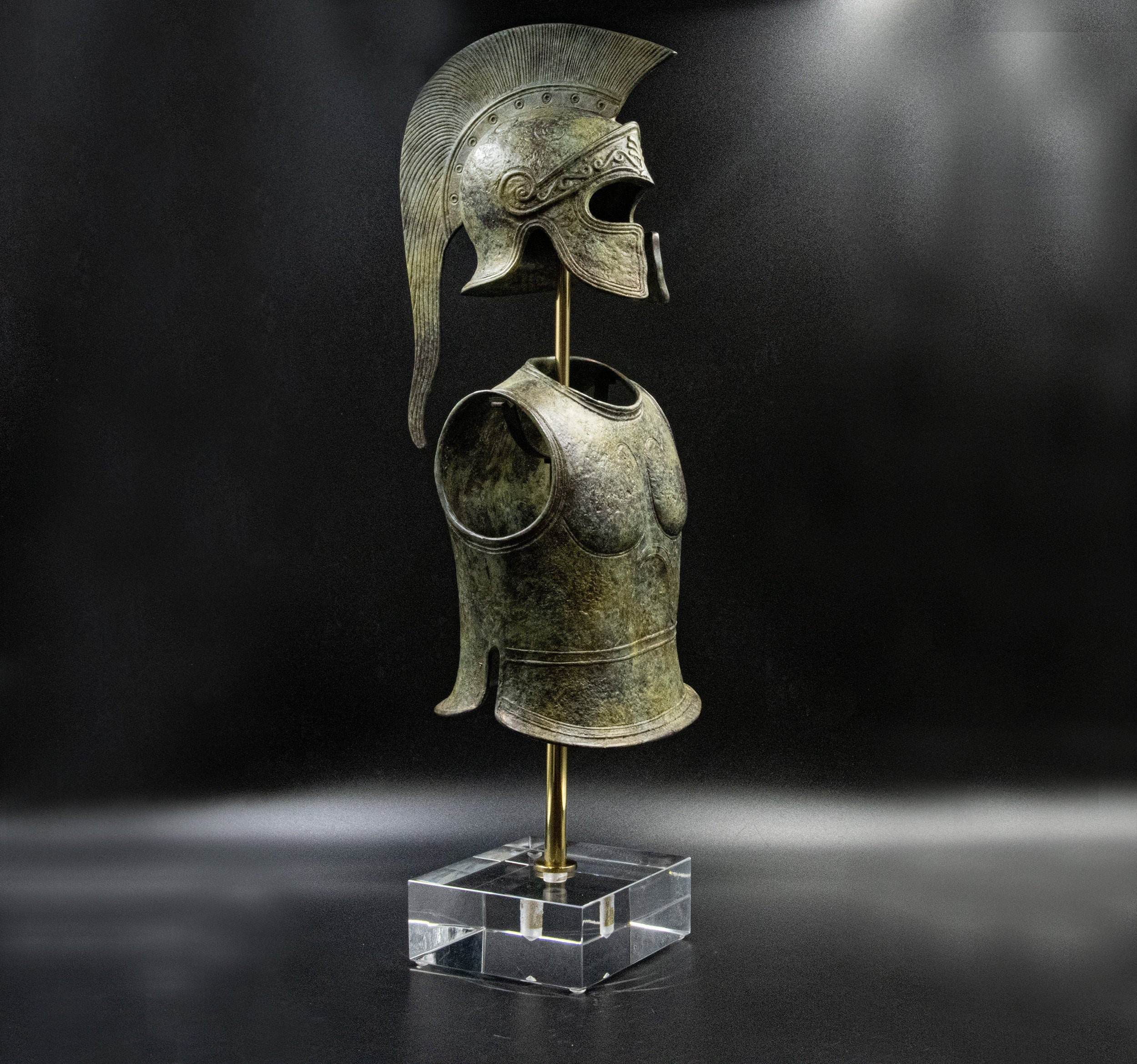
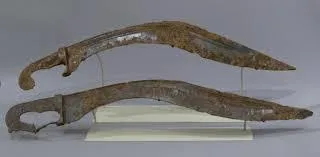
Image 1: Spartan armor (replica)
Image 2: Iron machaira sword
Image 3: Depiction of a Greek battle on a vase
Rome
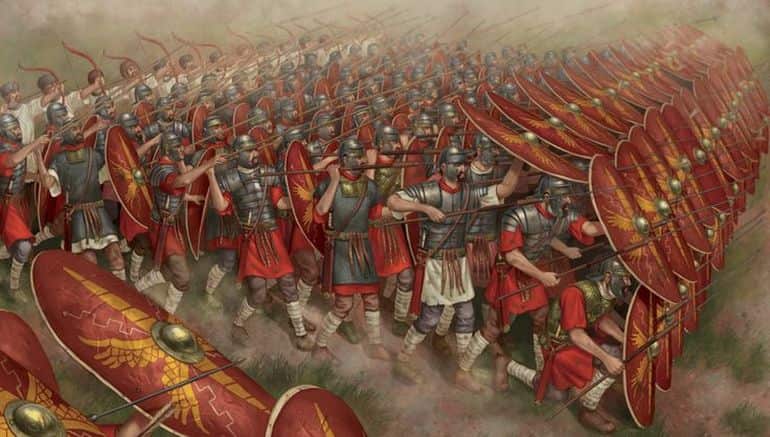
In Rome, war was much more advanced than it was in Greece. There were two types of Roman soldiers: Legionaries and Auxiliary, the difference being Legionaries were citizens and Auxiliary were not. Legionaries would join seven other men (8 men in total) to form a Contubernium. Contubernium would share sleeping quarters and live together. Ten Contubernium would form a Century. Each Century had a main commander and a secondary commander. Six Centuries made a Cohort. Ten Cohorts plus a cavalry unit of 120 riders created the largest unit in the Roman army, the Legion. Auxiliary soldiers would have different specialized tasks than the Legionaries. Auxiliaries would often be horsemen, slingers, and archers. Auxiliary foot soldiers would be organized the same as the Legionaries, but their largest unit is the Cohort. Once an Auxiliary soldier serves for 25 years, he is granted citizenship and Roman rights.
Weapons in Rome
In Rome, weapons were very similar to those of Greece. Romans would use short swords, javelins, large shields, ballistas, spears, catapults, longswords for cavalry, and more. Romans used a variety of advanced military tactics, including a tortoise formation (testudo), a formation that allows soldiers to rotate and new soldiers come in to stay less tired (Triplex Acies), and an improved phalanx.
This page was made by Jacksen Smith
Jacksen is awesome